
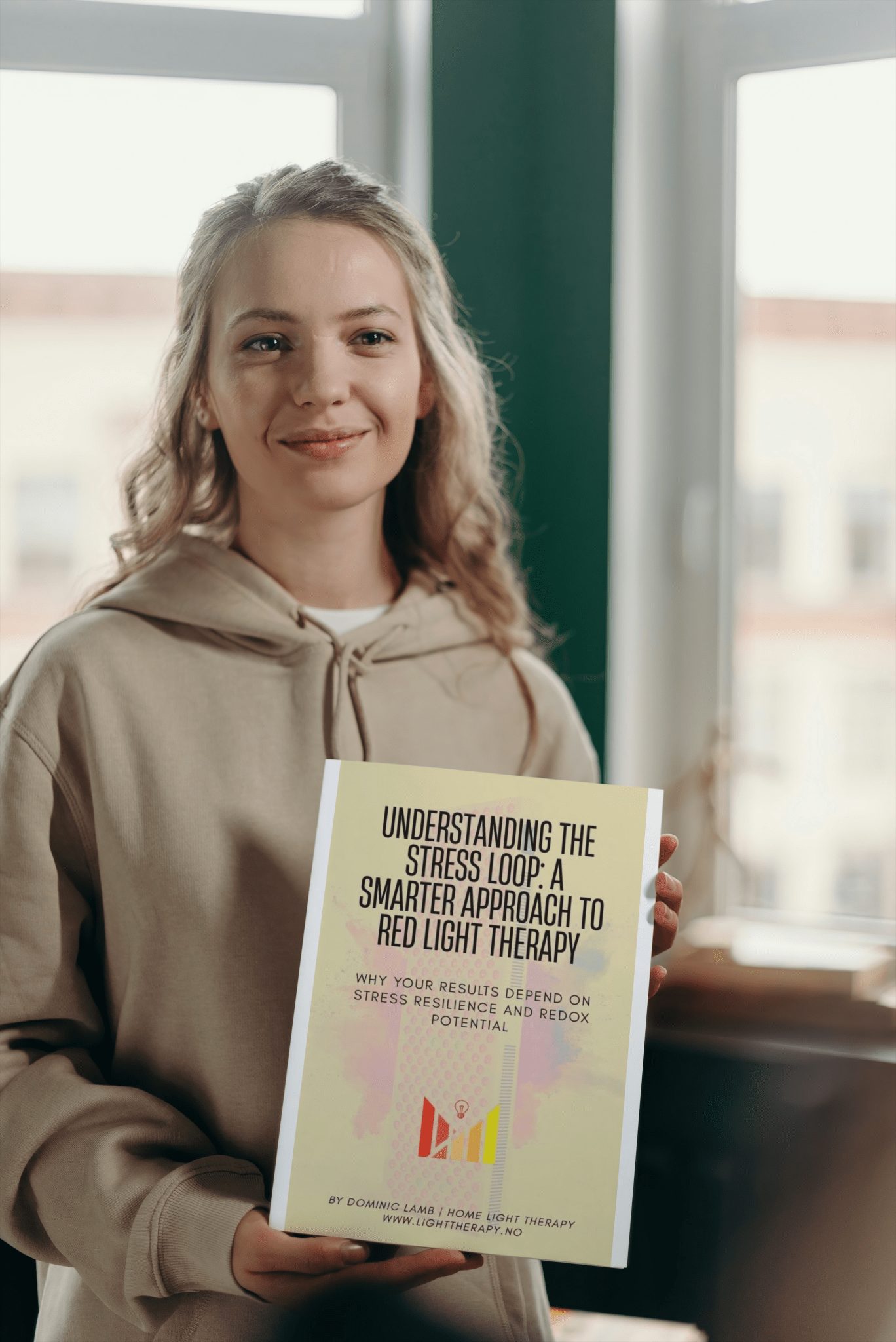
Why Doesn't Red Light Therapy Work the Same for Everyone?
This science-based guide covers the factor most people overlook: stress resilience and redox potential. Learn why red light therapy can be both the problem and the solution — and how to build the foundation needed for it to work effectively.
⚡ Instant Digital Access: Download the PDF immediately after purchase. Read on mobile, tablet, or computer.
What You'll Learn
- Why red light therapy is a hormetic stressor — just like exercise, cold exposure, and fasting, and why it requires adequate stress resilience to produce benefit
- Redox potential and glutathione — your body's master antioxidant system and how it determines whether red light helps or harms
- The virtuous vs. vicious cycle — why some people thrive with red light therapy while others feel worse
- The Arndt-Schulz principle — the biphasic dose-response curve that explains when more becomes worse
- 4-phase progressive protocol — a concrete plan over 12+ weeks to build resilience and optimise results
- Glutathione support — nutrition, supplements, and lifestyle strategies to strengthen the antioxidant system
- Optimal parameters — wavelength, dosing, distance, frequency, and duration from research
- Personal customisation — how to assess your current resilience and match the protocol to your level
What's Inside
Chapter 1: The Hidden Truth About Red Light Therapy
Why red light is a hormetic stressor that only delivers benefits when your body has sufficient stress resilience to respond positively.
Chapter 2: Stress Resilience and Redox Potential
Glutathione — your body's most important defence against oxidative stress. How your redox balance determines success or failure with photobiomodulation.
Chapter 3: The Red Light Therapy Paradox
How the same treatment can be both the solution and the problem depending on your current state. The virtuous vs. vicious cycle explained.
Chapter 4: The Smarter Approach — 4 Phases
A complete research-based protocol building stress resilience progressively over 12+ weeks. Assessment, foundation, progressive loading, and maintenance.
Chapter 5: Optimal Parameters for Red Light Therapy
Wavelength (630–850nm), energy density (1–40 J/cm²), distance (10–30cm), frequency (3–5× per week), and session duration (4–12 min) — from current research.
Chapter 6: Key Takeaways and Further Resources
The most important principles and where to continue learning about quantum biology and photobiomodulation.
This Guide Is For You If
- You've already invested in red light therapy but aren't seeing the results you expected
- You're considering purchasing red light and want to understand the science before investing
- You struggle with chronic fatigue, poor recovery, or feel overwhelmed by stress
- You want a scientific, personalised approach — not generic recommendations
- You need a structured, progressive plan based on research
- You're interested in quantum biology and how light affects the body at the cellular level

About the Author: Dominic Lamb
Dominic Lamb is the founder of Home Light Therapy and a researcher in photobiomodulation and quantum biology. Having worked with hundreds of Norwegians with red light therapy, he's seen both the remarkable results and the common pitfalls.
This guide is the culmination of his deepest insights about why stress resilience and redox potential are the most critical but rarely discussed factor in red light therapy outcomes. Through his weekly blog posts, Dominic continuously shares new research and practical advice.
🎁 Note for Device Purchasers
Purchasing a red light device from Home Light Therapy? This guide is included automatically with your device purchase. You'll also receive personalised guidance tailored to your specific equipment and goals.
⚡ All Sales Final: Due to instant digital delivery, all eBook sales are final. Download access is provided immediately after purchase.
What You Get
- Complete PDF guide (~20 pages)
- Instant digital access
- Lifetime access — no expiration
- Readable on all devices (mobile, tablet, computer)
- Research-based content from Dominic Lamb
Ready to Maximise Your Results?
Download the guide now and get instant access to the science that changes how you approach red light therapy. Begin building the stress resilience that makes the difference between results and frustration.