





AfterDark Quantum - Blue Light Blocking Glasses
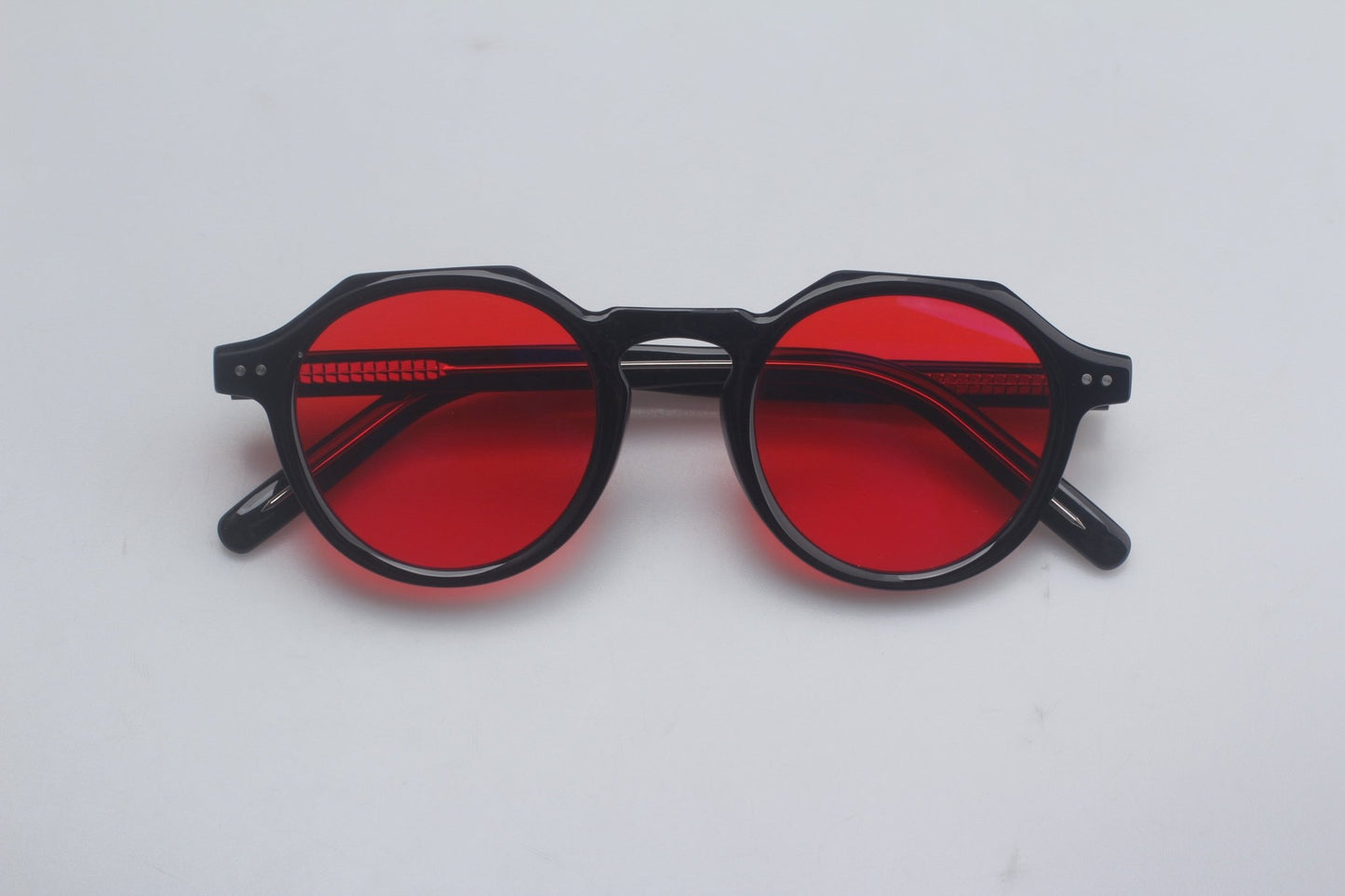
Round retro TR90 frames with UV400 protection. Spectrometer-tested Amber and Red lenses. Ships from Drammen.
(Runde blålysbriller med TR90-ramme og UV400, testet med spektrometer)
Why the frame shape matters as much as the lens
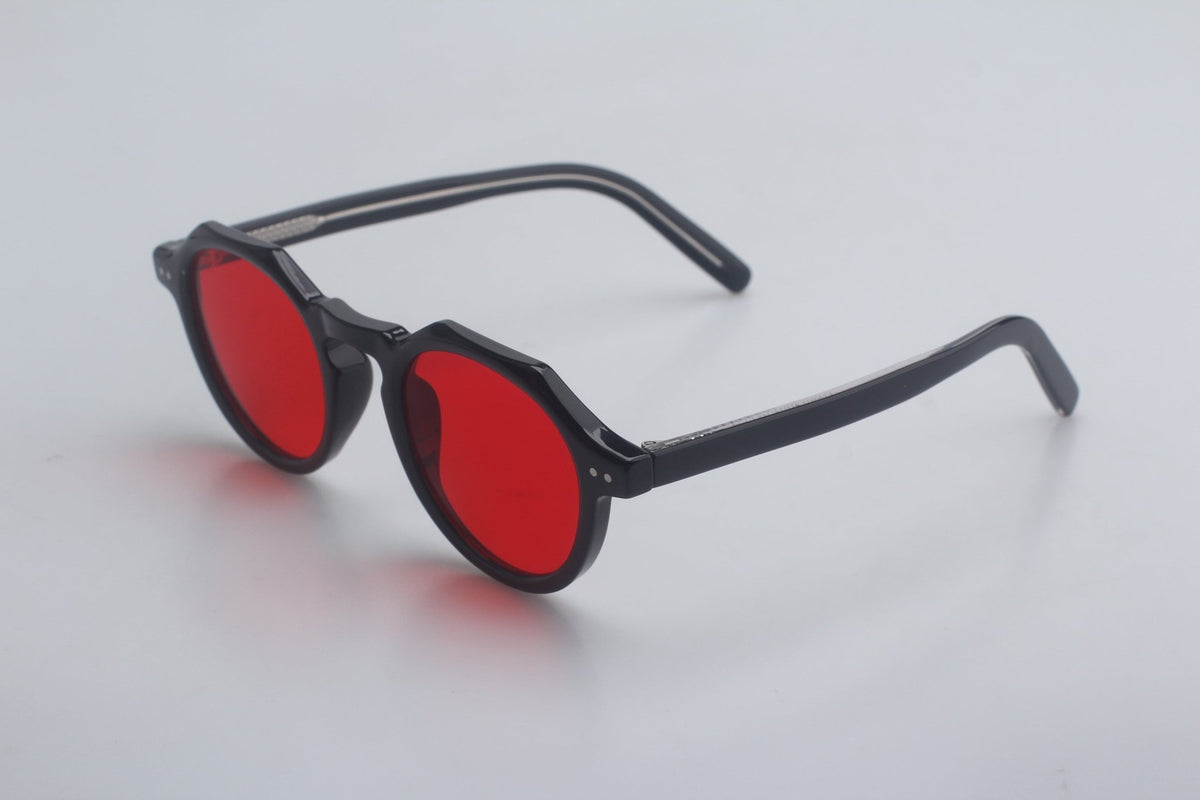
Most blue light glasses leave a gap at the sides. The Quantum's wider round lens profile wraps closer to the face, which means less peripheral light bleed around the edges, the stray ceiling light that slips past a narrow frame and still hits your retina.
The TR90 frame is light enough to forget you're wearing them. That matters for something you put on every evening for two to three hours. Pair that with spectrometer-verified Amber or Red lenses and you have a glasses setup that actually does what it claims. Read more about why blue light affects more than just your eyes, the biology runs deeper than most people realise.
Do blue light glasses actually improve sleep, or is it placebo?
Yes, and it's not placebo. Melanopsin receptors in your retina respond directly to blue light regardless of what you believe about it. I've had customers track sleep onset with these on for years: most notice they fall asleep faster within 3 to 5 nights of consistent wear, starting 2 to 3 hours before bed.
TR90 frame, the practical details
- Round retro profile, wider lens area for better peripheral coverage than narrow square frames
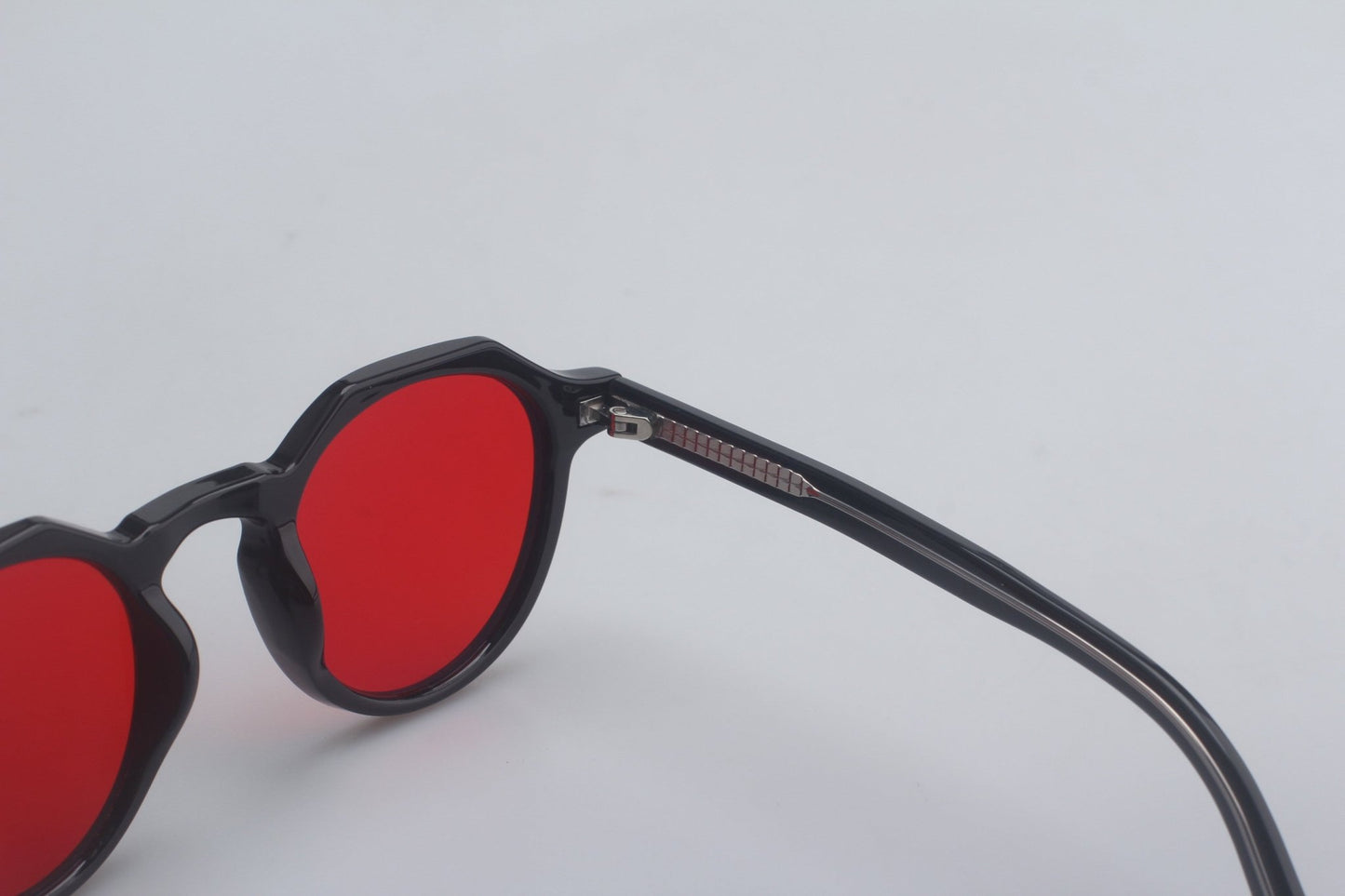
- Memory polymer flex, bends without snapping; survives being sat on or dropped
- Featherlight, typically forgotten within a few minutes of wearing
- Hypoallergenic, no nickel, suitable for sensitive skin and extended evening wear
- UV400 certified, full UV protection built in
- Frame size: 47mm lens, 24mm bridge, 149mm temple, fits most adult face shapes
Two lenses, choose by time of evening
Amber lens, 97% blue light blocked
- Covers the 380-500nm range where melanopsin activation is highest
- Maintains reasonable colour visibility, reading, watching TV, general indoor use
- Start wearing 2-3 hours before your target bedtime
- The right choice for most evenings, most of the year
- Verified by spectrometer, not a manufacturer claim
Red lens, 99%+ blue and green light blocked
- Blocks across the full 380-550nm range, including green wavelengths that amber misses
- Maximum melatonin protection, for the final 60-90 minutes before sleep
- Essential during Norwegian summer when daylight runs past 10pm
- Colour perception is heavily altered, for relaxed pre-sleep use only
- Worth switching to earlier on nights when sleep quality really matters
What is actually happening in your eyes
Your retina contains melanopsin photoreceptors ( intrinsically photosensitive retinal ganglion cells) that respond specifically to short-wavelength blue and cyan light. When these cells detect blue light, they send a signal to the suprachiasmatic nucleus (your brain's central clock) indicating that it's still daytime. Melatonin release is suppressed as a result, even when you're tired and it's 11pm.
Blocking those wavelengths with Amber or Red lenses in the evening removes that false daylight signal. Your melatonin rises on its natural schedule. Most people notice they feel sleepier at their usual bedtime within a few nights of consistent use, particularly if they were previously scrolling on a phone right up until they turned the light off. For a deeper read, the circadian lighting collection covers how this extends to your room environment, not just your screens.
Why AfterDark Quantum
Norway runs on extremes, your glasses need to match
Summer: the sun is up past 10pm in Oslo and well past midnight further north. Outdoor daylight keeps melatonin suppressed late, and then you come indoors to LED screens and carry on. Red lenses are worth it from 8pm onwards during lysårstid.
Mørketid: it's dark outside from 3pm but you're sitting under full-spectrum LED bulbs until midnight. Those bulbs emit the same short-wavelength light as a summer sky. Your body has no way to know it's polar night from inside your apartment. Amber lenses from late afternoon, every evening through winter, this is the same principle behind circadian lighting but applied to your personal light environment.
What's in the box
The rest of the AfterDark range
Looking for a different frame style? The Smooth has a contemporary everyday profile, the Classic suits a traditional look, and the Meridian comes with four magnetic lens swaps covering every protection level from clear to red, the most flexible option if you want all-day coverage. For daytime screen work without affecting your morning alertness, the Nooner uses a yellow lens calibrated for daytime use.

From Dominic
The round frame on the Quantum gives better peripheral coverage than most of the narrower frames I carry, you notice the difference when you're sitting in a bright room rather than a dim one. If you're new to blue light glasses, start with Amber. Wear them from dinner time. Give it a week before you judge. Most people notice something within three or four nights, they just feel sleepier when they'd normally still be wired. Add Red for the last hour if you're a light sleeper or it's a Norwegian summer evening and the sun still hasn't fully cooperated.
📧 admin@lighttherapy.no · 📞 +47 951 47 478 (Text only)
Important, not for driving or machinery
Both Amber and Red lenses significantly alter colour perception. Do not use while driving, cycling on roads, or operating any machinery. These are indoor, stationary evening glasses.
🚚 Ships from Drammen · No import fees within Norway
🛡️ 30 dagers åpent kjøp
Full refund within 30 days.
🔧 12-month warranty
Questions people actually ask
What is the difference between Amber and Red lenses in the AfterDark Quantum?
The Amber lens blocks approximately 97% of blue light and is designed for use 2-3 hours before sleep while maintaining enough colour visibility for normal indoor activities, reading, TV, conversation. The Red lens blocks over 99% of both blue and green light across the 380-550nm spectrum, meaning maximum melatonin protection for the final 60-90 minutes before sleep or during Norwegian summer evenings when daylight extends past 10pm.
Når bør jeg begynne å bruke blålysbriller om kvelden?
Amber lenses from 2-3 hours before your target bedtime. Red lenses in the final 60-90 minutes. If you are sensitive to sleep disruption or it is Norwegian summer with daylight past 9pm, move the switch to Red earlier than usual.
What is TR90 and why does it matter for glasses you wear every evening?
TR90 is a thermoplastic memory polymer used for eyewear frames. It flexes under pressure and returns to shape rather than snapping, important for glasses worn daily that get sat on, dropped or shoved in a bag. It is also hypoallergenic and very light, which matters for frames worn for 2-3 hours every evening.
Hva blokkerer blålysbriller og hvorfor hjelper det søvnen?
Blålysbriller blokkerer de korte bølgelengdene i det synlige lysspekteret (380-500nm) som aktiverer melanopsin-reseptorene i netthinnen. Disse reseptorene sender signaler til hjernen om at det fortsatt er dag, noe som undertrykker melatoninproduksjonen. Ved å bruke blålysbriller om kvelden kan kroppen produsere melatonin på riktig tidspunkt, selv om du sitter under kunstig LED-belysning.
Er Quantum-linsene spektrometertestet?
Yes. The blocking percentages stated, 97% for Amber and 99%+ for Red, are verified by spectrometer testing, not manufacturer claims. The AfterDark range tests every lens variant across the full spectrum from 340nm to 1000nm.
Er disse brillene nyttige under norsk mørketid?
Ja. Under mørketid er problemet ikke sollys, det er at nordmenn sitter under kunstige LED-lys i 16+ timer om dagen. Standard LED-belysning inneholder de blå bølgelengdene som undertrykker melatonin like effektivt om vinteren som solen gjør om sommeren. Amber-linser fra tidlig kveld, hver dag gjennom vinteren.
What is included with the AfterDark Quantum?
Glasses with your chosen lens colour, a hard protective case, and a microfibre cleaning cloth. A 12-month warranty is included. Ships from Drammen with no import fees.