

🌙 Blue Light Free Evening Bulbs — E27 & E14 for Melatonin-Safe Home Lighting
(Norsk: Blålysfilter pærer for bedre søvn — melatonin-sikker kveldslys)
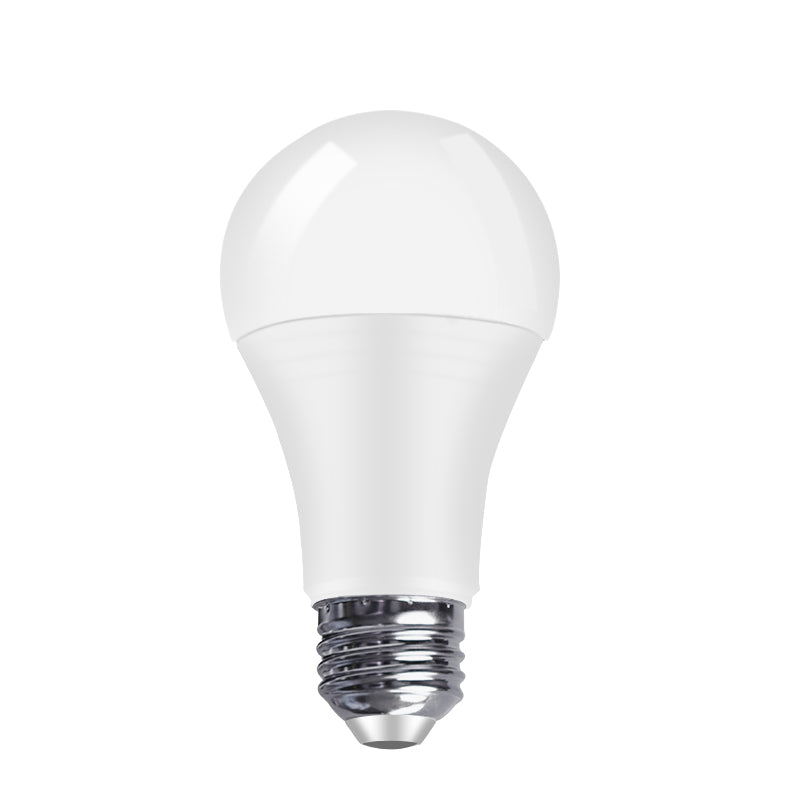
Four variants from pure red to multi-mode day-to-night. Same E27 and E14 fittings as your existing lamps — swap and done. No blue wavelengths in the output, no melatonin suppression in the evening.
The Biology in One Paragraph
Standard white LEDs emit a peak around 450nm — blue-cyan — that strongly activates melanopsin in the retina. Melanopsin signals the suprachiasmatic nucleus to suppress melatonin production. Research on blue light and circadian disruption consistently finds that evening exposure is associated with delayed sleep onset and altered sleep architecture. These bulbs remove blue wavelengths from the output entirely — your room stays lit, the circadian signal changes.
The underlying science is well-established; individual sensitivity varies. If you have persistent sleep issues, also consult a healthcare provider.
Four Variants — Choose by Use Case
Why It Matters
😴 Melatonin Protection
No blue wavelengths means no melanopsin activation — your body's own melatonin production runs on its natural timetable.
👀 Eye Comfort
Flicker-free, warm spectrum. Comfortable for extended evening reading without the eye fatigue associated with blue-rich white LEDs.
⏰ Circadian Support
Evening light environment is a key input to the circadian clock. Changing it from blue-rich to amber changes the signal your brain receives.
👨👩👧 Whole Family
Children's circadian systems are particularly sensitive to blue light. Changing the room's bulbs protects everyone, including those who won't wear glasses.
💰 Energy Efficient
LED technology — low wattage, long lifespan. Inexpensive to run through months of extended Norwegian winter evenings.
🔌 Fits Any Lamp
E27 and E14 cover virtually all Norwegian lamp fittings. No adapters, no rewiring — screw in, done.
🇳🇴 Norwegian Winters — When the Bulbs Do Most of the Work
From October to March, families spend most of their waking evening hours under artificial light. Without deliberate choices about wavelengths, that means sustained blue light exposure from late afternoon until bed. Swapping the bulbs is the simplest possible intervention — everyone in the room benefits automatically, no behaviour change required.
🔗 Complete the Protocol
- Personal screen protection: Afterdark glasses — handles screens the room bulbs can't filter
- Nighttime movement: Motion sensor amber light for bathrooms and hallways
- Kids' bedside: Wireless kids' night lamp — bedside red and amber with touch control
- Daytime: Reduced blue-spike daytime bulbs — same quality thinking for the daylight hours
Technical Specifications
| Fittings Available | E27 (standard) and E14 (candelabra) |
| RedGlow Wavelength | ~625–660nm pure red, zero blue/green |
| AmberEase | Warm amber, blue wavelengths blocked |
| Day-Night 3-Mode | Full spectrum → reduced blue → amber |
| Evening-Night 3-Mode | Amber → amber+red → pure red |
| Mode Switching | Brief off/on cycle through lamp switch |
| Flicker | Flicker-free LED |
| Certifications | CE, RoHS |
| Warranty | 1 year |

From Dominic
The glasses get the most attention, but the room bulbs do more of the heavy lifting — they change the light environment for everyone in the room without anyone having to do anything. If you're not sure where to start, swap the bedroom and bathroom overhead bulbs first. Most people notice a difference within a week.
📧 admin@lighttherapy.no · 📞 +47 951 47 478 (Text only)
🚚 Ships from Drammen · No import fees
🛡️ 30 Dagers Åpent Kjøp
Full refund within 30 days.
🔧 1-Year Warranty
❓ Frequently Asked Questions
Why do standard LED bulbs disrupt sleep?
Standard white LEDs emit blue wavelengths around 450nm that activate melanopsin — the retinal photoreceptor that suppresses melatonin. Research consistently associates evening blue light exposure with delayed sleep onset and reduced sleep quality. These bulbs remove those wavelengths.
Which variant is right for my room?
RedGlow for bedrooms and nurseries — maximum protection, final hour before sleep. AmberEase for living areas — warmer, comfortable for reading and general evening use. Day-Night 3-mode for rooms you use all day (kitchen, desk). Evening-Night 3-mode for bedroom lamps that transition through the evening wind-down.
Are these as bright as regular bulbs?
Red and amber bulbs are visibly warm rather than bright-white. The output is functional for reading and general use — but the experience is different from a standard cool-white LED. That difference is the point: your brain reads warm amber as evening, not daytime.
How long do they last?
LED lifespan well above 20,000 hours — years of regular evening use.
Will they fit my lamps?
Yes. E27 and E14 cover virtually all Norwegian lamp fittings. Screw in, done.
Are they safe for children's rooms?
Yes. No blue light means no melatonin-suppressing signal. Children's circadian systems are particularly sensitive to blue light, so the bedroom bulb swap is often one of the most effective things parents can do for kids' sleep.